


First Aid Kit for the Car
Updated: 01/08/2023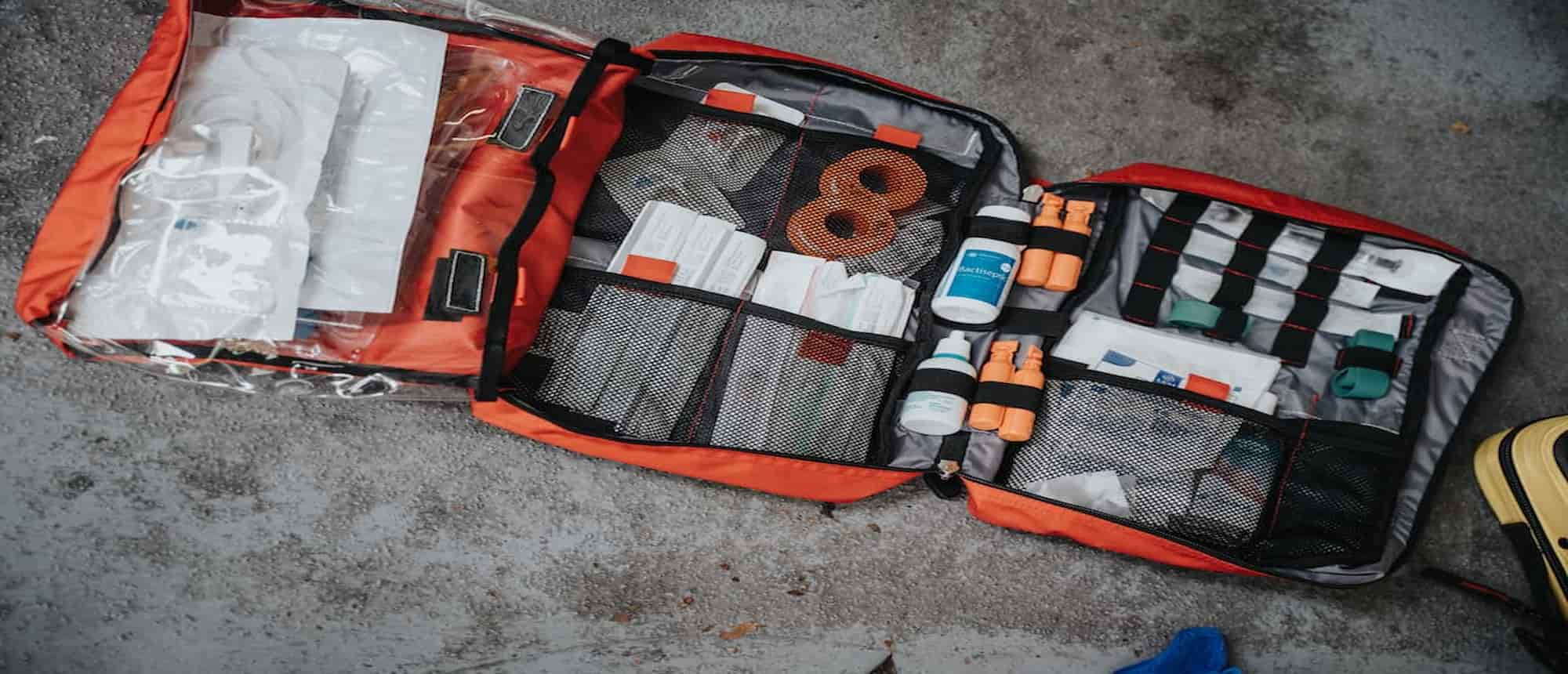
Having a first aid kit in the car is never superfluous, as it can help you treat minor injuries such as cuts, insect bites, hypothermia or dizziness derived from a trip, apply first aid after suffering an accident or to assist others.
On each car trip, it is essential to always keep in mind the safety and well-being of the driver and companions. In emergency situations, having a first aid kit with the necessary items can get you out of a tight spot or even save a life.
In this article, we will focus on those basic elements that should be included in a first aid kit for your car, ensuring that you can face the most common events that may arise.
Is it mandatory to carry a first aid kit in the car?
In Spain it is not mandatory, as it is in other European countries, for example, Belgium or Austria. However, the General Directorate of Traffic (DGT) does recommend carrying one, especially if you are going to make a long trip or travel through places and times of the year when you may suffer from inclement weather, for example, a snowfall, torrential rain or high temperatures.
Before traveling to another country by car it is advisable to consult the legislation on this matter.
Prepare the basic first aid kit for your car
Before a long journey or through inhospitable places, especially outside of Spain, we recommend consulting the regulations of the country in question to know if there are guidelines on this matter. Studying the landscapes or routes to be traveled is essential to anticipate incidents, we also recommend having emergency phone numbers (and the nearest Spanish embassy or consulate) handy. The supervision of a doctor or specialized professional who can give their opinion on the travel first aid kit you have prepared is always very useful.
The first aid kit should be supplemented and adapted according to the needs and characteristics of the trip. A summer family trip along the coast of Spain is not the same as an adventure trip through Mauritania or to move to a Pyrenean village in the middle of a cold wave in winter. In fact, checking the weather forecast can save you from a surprise or two.
Let's start by reviewing the material or shape of the first aid kit, as well as its size. It should always be a quality material that resists the inclement weather as best as possible and is resistant to shocks or vibrations. In addition, the material must ensure its cleanliness and the isolation of its components. On the other hand, it is always interesting to have a first aid kit as compact as possible so that it does not take up much space.
Next, we will focus on what elements should be included in the first aid kit of our car.
Dressings, bandages and plasters
They are an essential element for the cure and protection of small wounds, cuts or scrapes. It would be advisable to have different sizes, especially if you are traveling with children. You cannot miss bandages, dressings and adhesive tape, as well as disposable vinyl gloves for handling bleeding wounds, especially if they are from third parties.
Cleaning and disinfection elements
To clean wounds, before applying a bandage or dressing, it is necessary to apply physiological saline or neutral soap for cleaning. Likewise, you should not forget to carry some antiseptic such as povidone or chlorhexidine to disinfect wounds and prevent infections. Other examples of disinfectants are hydrogen peroxide or alcohol. Another possible option is antibacterial wipes.
Medical utensils
You should not overlook round-tipped scissors and tweezers that may be useful for cutting bandages or clothes, removing splinters or thorns, etc.
Basic medications
It is advisable to carry antipyretics and analgesics such as paracetamol or ibuprofen to relieve mild pain or treat febrile states on long trips. You must be careful not to leave medications forgotten inside the first aid kit after the trip, as being in a closed and unventilated space, they could deteriorate.
Anti-inflammatory ointments, against insect bites or to cure burns, may be advisable depending on the type of trip you are going to undertake.
It is vital to keep the medications in their original container and in a cool, dry place. In addition, you should check the expiration dates and leave at a pharmacy the medications that have already expired.
Additional items for your travel first aid kit
One or two thermal blankets take up very little space and can always be very useful in the face of inclement weather, especially against hypothermia or to shelter accident victims while waiting for the arrival of emergency services.
For fractures, you can carry a handkerchief or bandages that would serve to immobilize the arm as a sling. You could even tighten it using one or two safety pins. Hemostatic cords are used to stop massive hemorrhages from the extremities as a tourniquet.
Depending on your destination and time of year, it is advisable to add an insect repellent and antihistamines to the first aid kit. This will be very useful in case of insect bites or unexpected allergic reactions. And, if you go with children, it is never superfluous to carry bags for vomiting or pills for dizziness, especially if you travel on mountain roads or secondary roads with curves.
List of things that should be included in the first aid kit for the car
Below, you can find a list of items that we consider basic to carry in the first aid kit of your car:
- Dressings, adhesive tape or plasters of different sizes.
- Sterile gauzes, compresses, cotton,
- Round-tipped scissors to cut bandages, tweezers and safety pins.
- Large handkerchief or bandages
- Antiseptic solution.
- 2 - 3 pairs of disposable sterile gloves.
- 2 - 3
- 1 hemostatic cord.
- 2 packs of pocket disposable tissues.
- Single-dose saline solution.
- Instant cold bag.
- 2 - 3 thermal blankets.
- Vomit bags.
- 2 garbage bags.
- First aid manual with emergency phones noted.
- Optional: pills for dizziness, ibuprofen, paracetamol, antacids, antipyretics (children's, if applicable), anti-inflammatory ointment, ointment for burns, sunscreen, Swiss knife or multipurpose, flashlights, digital thermometer, scalpel, emergency instrument to break the glass and cut the car safety belt (this should always be at hand).
What to do in the event of a traffic accident
In addition to preparing or checking a first aid kit, you should be prepared for the possibility of encountering a traffic accident.
That is why we recommend, whether or not you are going to make a trip, to directly consult this article from the DGT.
Conclusion about carrying a first aid kit in the car
Carrying a first aid kit in your vehicle is always a good idea. For starters, it will provide you with peace of mind and safety on your trips. Although in Spain the General Vehicle Regulations do not oblige it, it is advisable to have one and make sure it is complete and in good condition.
It is always advisable to consult your doctor or pharmacist in case of doubt or to obtain recommendations if you are going to undertake a trip outside of what you are used to.
In our online store, we have a wide variety of first aid kits and kits that we invite you to consult.
If you have any questions, our customer service is at your entire disposal.
Products in this article

Empty Mini Jumbo Kit Cramer First Aid Kit
115,00€(139,15€ VAT INCLUDED)
Empty black canvas first aid kit
18,00€(21,78€ VAT INCLUDED)
Cramer Emergency Kit. Empty
490,00€(592,90€ VAT INCLUDED)


