


Which syringe to choose? All types of syringes.
Updated: 18/05/2021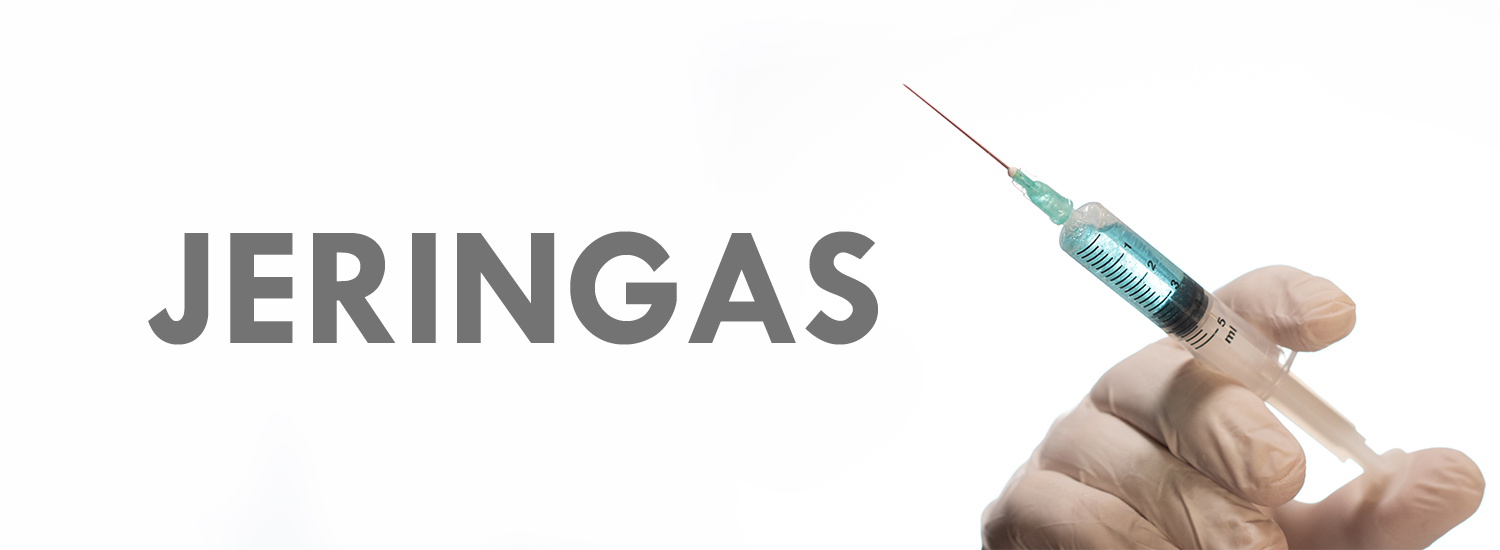
Syringes are an indispensable tool in the work routines of healthcare professionals as they are used to deliver medications or other substances, through different routes. They are basically composed of a cylindrical tube usually made of plastic that has a graduation engraved directly on its surface, a plunger that pushes the fluid to be injected, and a narrowing at one of its ends where a needle or peripheral vein is attached for administration or extraction.
They are usually presented in a sealed sterile individual package and are classified as Class I and IIa medical products according to EU regulations.
Types of syringes
Syringes can be classified based on the number of parts they have, distinguishing between 2 and 3 body types.
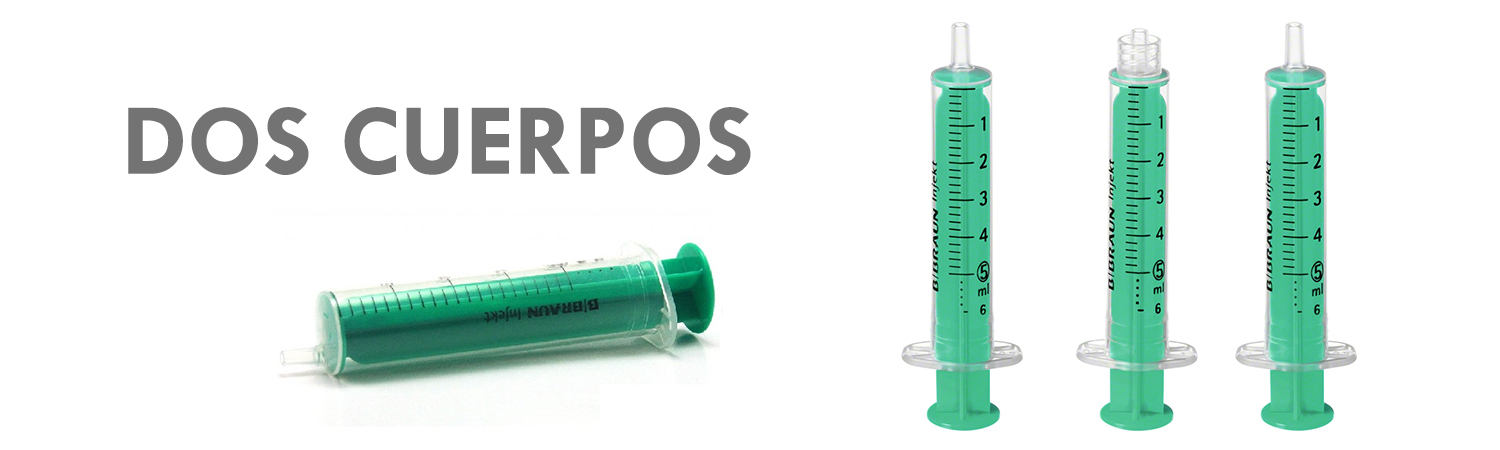
The 2 body syringes consist of the body, a compartment designed for the deposit of medication or solution to be injected, and the plunger, part that is introduced into the tube to fill or empty the body of the syringe. These types of syringes are generally used for the preparation and oral administration of medications, such as in the case of children's drugs.
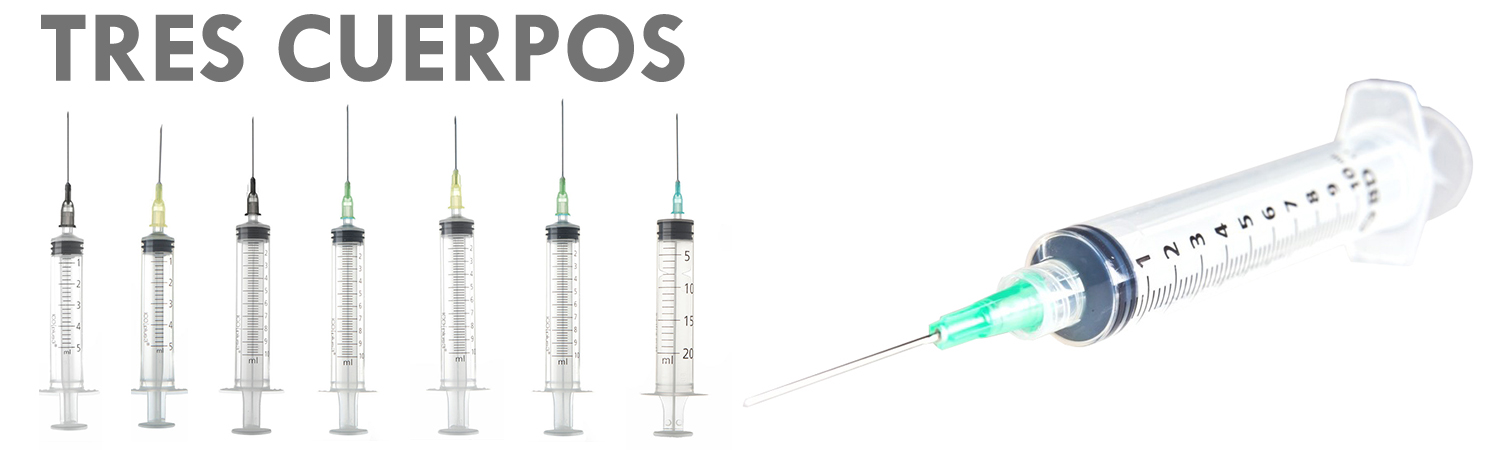
On the other hand, 3 body syringes include, in addition to the aforementioned parts, a rubber piston at the end of the plunger to properly retain the liquid and prevent it from escaping when pressed. This type of materials are more accurate and ensure a more rigorous procedure as they minimize the chances of product loss.
3 body syringes can have various types of connections depending on the type of cone that the syringe has and the way the needle is secured to it.
Firstly, we find the luer type syringes, designed with a cone-shaped tip onto which the needle is pressure-fitted and allow the injection of liquid and low viscosity medications. Luer syringes can be made with a needle, incorporated or not, as is the case with insulin syringes with a needle.
Secondly, we find the luer lock type syringes, made with a double thread on their tip for a better grip of the needle, preventing it from slipping and making it safer in injections of high density substances as it is screwed onto the cone of the syringe and prevents it from sliding when pressure is applied to inject or suction.
On the other hand, we also find catheter cone or feeding cone needles for large volume syringes composed of the body, usually made of polypropylene; the plunger, the synthetic rubber sealing gasket and, finally, the catheter or feeding type cone, which facilitates the connection of probes or other types of connections. This type of syringes are usually used to apply medication and collect samples of body fluids, administer patient feeding through a nasogastric tube, as well as perform bladder washes with a urethral catheter.
There is also a wide variety of syringe sizes depending on the volume of medication or solution to be injected or extracted. We can find syringes from 1 ml to 50 or 100 ml designed with different graduations that adjust according to the size of the needle and/or the doses to administer.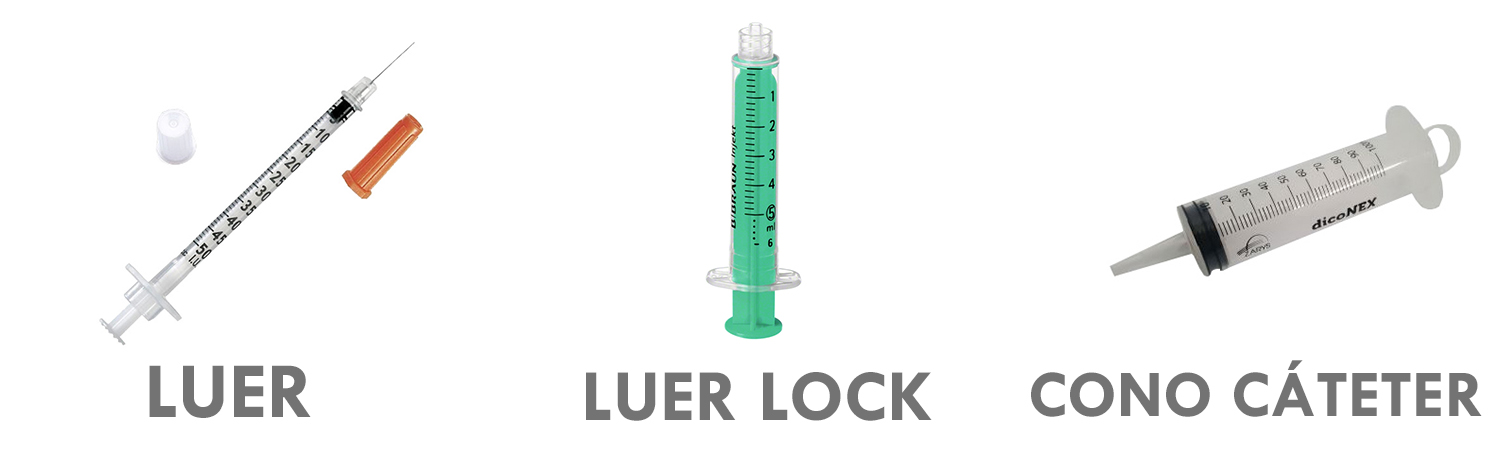
Residue-free syringes
It is interesting to note the improvements in the design of syringes, where a piston has been included that reaches almost to the end of the connection cone, thereby reducing the residual space when a solution is administered and, at the same time, minimizing the amount of product that is lost in each injection.
Conventional syringes have a flat plunger, causing some content to always remain in the body. Although this residual volume is taken into account when marking the graduation on the syringes, there are cases where it is very important to inject the entire solution either because they have a high cost or because there is little availability of the product. These syringes, designed mainly for the injection of high-value substances, such as botulinum toxin (Botox) or other medications, are proving very useful at the moment as they are used for the inoculation of the Covid-19 vaccine.
The residue-free syringes manage to take advantage of all the doses in the vials and do not waste milliliters of the medication or substance being injected thanks to the plunger they have, which fits perfectly in the cone of the syringe. This characteristic becomes especially important in some medical procedures such as, for example, vaccination, making it possible to vaccinate a greater number of people thanks to the use of this residue. The most common on the market are 1 ml syringes with a residue of 35 microliters at most.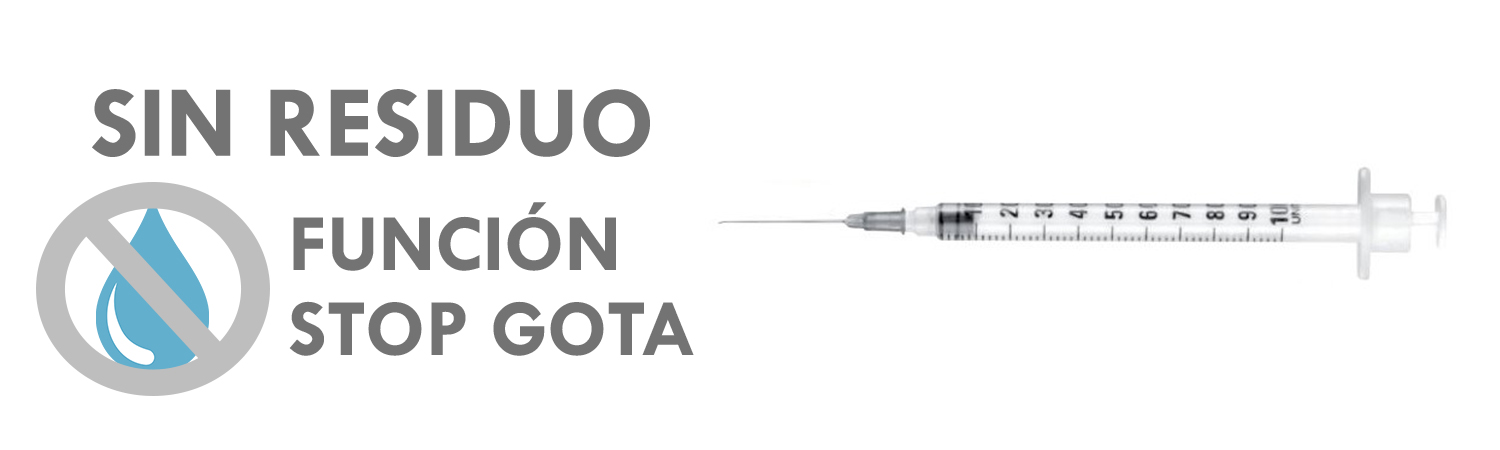
Your trusted distributor
Thanks to our long experience in the sector and our extensive catalog, you will find the syringes you need to meet the medical needs of your practice. From syringes with 2 or 3 bodies, luer/lock type and insulin syringes with a needle, to specifically designed for liposculpture treatments, all of them made with high quality materials to guarantee both patient and healthcare professional safety throughout the treatment.
Products in this article

1ml Luer Lock DH-ject syringe, without residue. Box of 100 units
14,95€(18,09€ VAT INCLUDED)


