


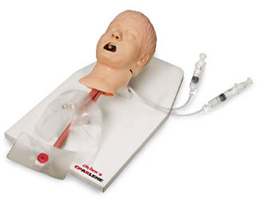
Advanced model for practice of complications in children's respiratory pathways
Confront your students with the challenges they will face in the real world. The advanced model for practicing respiratory complications in children can demonstrate tongue swelling and laryngospasm. The model, the size of an 8-year-old patient, is perfect for practicing the skills needed in...

Description

Confront your students with the challenges they will face in the real world. The advanced model for practicing respiratory complications in children can demonstrate tongue swelling and laryngospasm. The model, the size of an 8-year-old patient, is perfect for practicing the skills needed in pediatric patients, such as intubation, ventilation, suction, and jaw traction maneuver. The model is anatomically realistic and shows teeth, tongue, oral and nasal pharynx, larynx, epiglottis, arytenoids, false and true vocal cords, trachea, lungs, esophagus, and stomach. It allows the practice of oral, digital, and nasal intubation, as well as the use of the endotracheal tube (ET), the esophageal obturator EOA, the double lumen tracheal and pharyngeal cannula PTL, the laryngeal mask airway LMA, the esophageal gastric tube EGTA, and the insertion of a Combitube®. With separate lungs for auscultation and inflatable stomach bladder in response to esophageal insufflation. The slightly forward position, the swelling of the tongue, and the vocal cords make this advanced pediatric model perfect for initial and advanced training. It includes a stand to mount the head, lubricant for the spray pump, and a carrying case.
Alternative products

Adult Airway Trainer - economical
2.253,00€(2.726,13€ VAT INCLUDED)
Airway management in adults
3.761,00€(4.550,81€ VAT INCLUDED)
Lubricating substance (silicone oil) for endotracheal intubation...
102,33€(123,82€ VAT INCLUDED)
Replacement synthetic skin for the intubation simulator ref. 10721005396
899,00€(1.087,79€ VAT INCLUDED)
Endotracheal intubation simulator
5.088,00€(6.156,48€ VAT INCLUDED)
"Airway Larry" Adult Airway Management Simulator
2.164,00€(2.618,44€ VAT INCLUDED)


