


Did you know that 1 in 10 hospitalized patients can contract a nosocomial infection in the operating room? Find out how to prevent it.
Updated: 22/03/2017
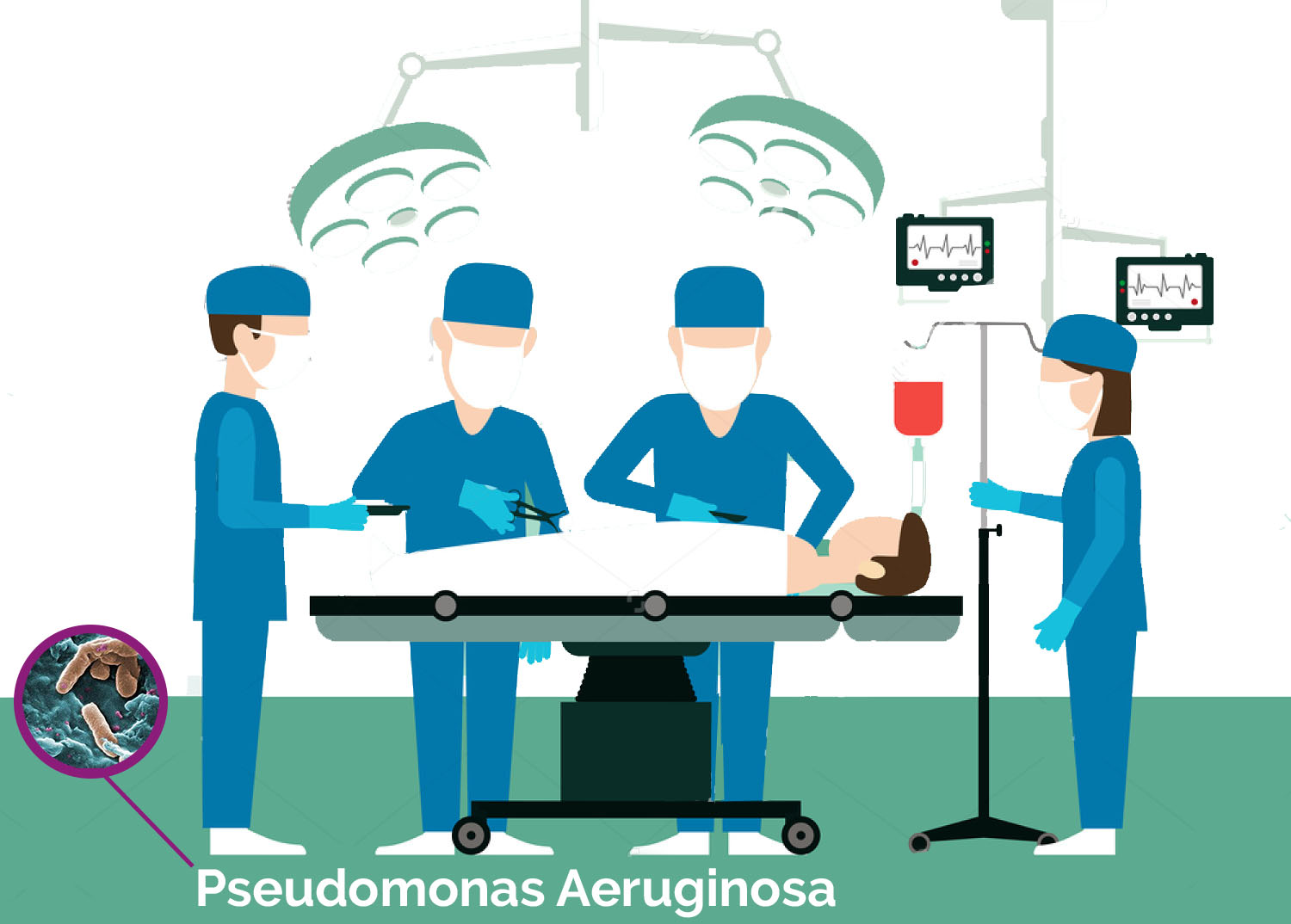
Pseudomonas Aeruginosa present in the fluids
When the aeruginosa pathogen grows, the biofilm is formed, a viscous film that adheres to surfaces. In order to analyze the impact of this pathogen on medical devices, Dr. Blom and associates designed a trial to understand how the biofilm behaves with Sodium Polyacrylate, a water-absorbing polymer, and the main component of the superabsorbent Drymax carpet. For this, they recreated a clinical situation for the biofilm to form 4,5, and they discovered that Drymax limited pyocyanin, a toxin that causes cell damage and infects with the aeruginosa host. 4,6-8
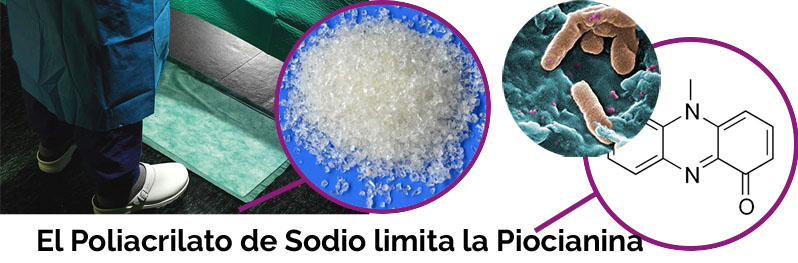
The obtained results represent a great advance, as they have indirectly discovered that by limiting pyocyanin, it helps to prevent infections, and although the pathogen's cells are present, the bacteria can be fought without inducing resistance 9, and simplify the eradication of any bacteria from the human immune system.10
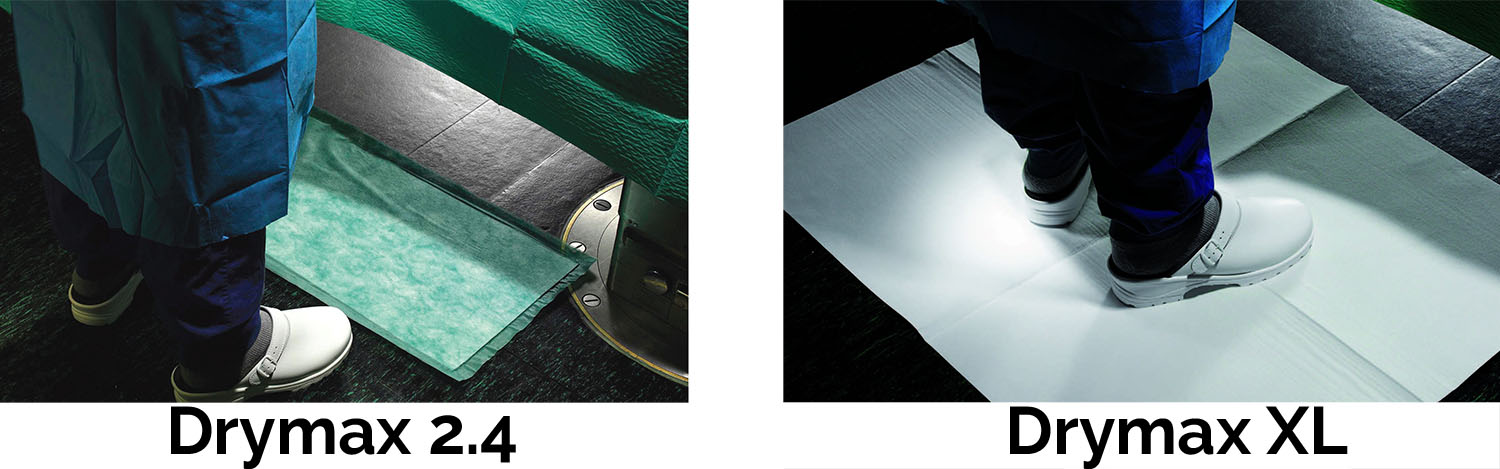
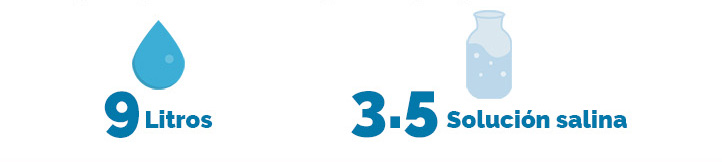
Aside from this study, another was conducted to demonstrate how absorbent the core of Drymax 2.4 is in an operating room. The outer layers of Drymax carried approximately 12 liters of distilled water, 9 liters of tap water and 3.5 liters of saline solution to its core, effectively retaining fluids containing bacteria and other substances.11
It has been shown that despite the few millimeters of Drymax 2.4 is able to retain fluids, such as water, iodine solution, irrigation fluids, amniotic fluid, urine and blood, in a hygienic and safe way. When Drymax is completely filled, it can be discarded without any leaks or drips.
How does Drymax work?
The superabsorbent carpet 2.4 can be placed under the operating table and/or in front of the operating team. While Drymax XL is placed on the floor to step on. The latter has a non-slip barrier that keeps the carpet in place and prevents slipping. Both can be used in combination for greater results.
Advantages of Drymax 2.4 and XL
•Safer work environment
•Able to absorb from both sides and without leakage. Liquids are gelled thanks to superabsorbent polymers.
•Less time and money spent on cleaning
•Reduces the risk of cross-contamination
•Non-slip
Do you want more information about Drymax 2.4 or Drymax XL? You can ask us through the following link or by calling us at 93 864 37 07 or writing to info@dhmaterialmedico.com.
Bibliography
[1]. Graves N. Economics and preventing hospital infection. Emerg Infect Dis J. 2004; 10 (4):561-566
[2]. Capelletti R. Waterborne microorganisms and biofilms related to hospital infections: strategies for prevention and control in healthcare facilities. J Water Health. 2016; 14 (1)52-67
[3]. Grosso-Becerra M. Pseudomonas aeruginosa clinical and environmental isolates constitute a single population with high phenotypic diversity. BMC Genomics. 2014;28 (15):1471-2164.
[4]. Larko E, Persson A, Blom K. Effect of superabsorbent dressings in a 3D cellular tissue model of Pseudomonas. J Wound Care. 2015; 24 (5):206-210.
[5]. Hakonen B. A novel qualitative and quantitative biofilm assay based on 3D soft tissue. Int J Biomater. 2014;2014:768136.
[6]. Denning G, Railsback M. Pseudomonas pyocianin alters calcium signaling in human airway epitelial cells. Am J Physiol. 1998;274(6):893-900.
[7]. Denning G, Wollenweber L, Railsback M. Pseudomonas pyocianin increases interleukin-8 expression by human airway epitelial cells. Infect Immun. 1998;66 (12):5777-5784
[8]. Lau G, Hasset D, Ran H, et al. The role of pyocyanin in pseudomonas aerginosa infection. Trends Mol Med. 2004;10(12):599-606.
[9]. Cegelski L, Eldridge MGG, Hultgren S. The biology and future prospects of antivirulence therapies. Nat Rev Microbiol. 2008;6(1):17-27.
[10]. Jimenez P, Thompson J. The multiple signaling systems regulating virulence in Pseudomonas aerginosa. Microbiol Mol Biol Rev. 2012;76(1):46-65.
[11]. Data on file, Absorbest. R16-0017- Absorption capacity of different solutions for Drymax 2.4.

